Available courses
Preparatory English (1)
|
N8022-4
Code
|
4
Credits
|
Level 2
Level
|
v1
Version
|
|
Bachelor of Nursing Program
Makkah National College
|
- Enrolled students: 20

Fine Dining Service
|
FBP P101
Code
|
4 ECTS
Credits
|
BBA 1
Level
|
v1.0
Version
|
|
Hospitality & Tourism Faculty · Hospitality Operation Department
Makkah National College
|
- Enrolled students: 38

Saudi Cuisine
|
FBP P117
Code
|
4 ECTS
Credits
|
BBA 1
Level
|
v1.0
Version
|
|
Hospitality & Tourism Faculty · Hospitality Management Department
Makkah National College
|
- Enrolled students: 38
Managing Banqueting and Event Operations
|
FBP P105
Code
|
2 ECTS
Credits
|
BBA 1
Level
|
v1.0
Version
|
|
Hospitality & Tourism Faculty · Hospitality Management Department
Makkah National College
|
- Enrolled students: 30

Pastry Atelier
|
FBP P106
Code
|
4 ECTS
Credits
|
BBA 1
Level
|
v1.0
Version
|
|
Hospitality & Tourism Faculty · Hospitality Management Department
Makkah National College
|
- Enrolled students: 39

Hospitality Discovery Experience in Saudi Arabia
|
HOS P802
Code
|
2 ECTS
Credits
|
BBA 1
Level
|
v1.0
Version
|
|
Hospitality & Tourism Faculty · Hospitality Management Department
Makkah National College
|
- Enrolled students: 26

World of Barista
|
FBP P108
Code
|
2 ECTS
Credits
|
BBA 1
Level
|
v1.0
Version
|
|
Hospitality & Tourism Faculty · Hospitality Management Department
Makkah National College
|
- Enrolled students: 39

Front Office Practical, Concierge and PMS
|
RDM P321
Code
|
4 ECTS
Credits
|
BBA 1
Level
|
v1.0
Version
|
|
Hospitality & Tourism Faculty · Hospitality Management Department
Makkah National College
|
- Non-editing teacher: Alhanouf Alsharif
- Enrolled students: 32

Housekeeping Operations
|
RDM P302
Code
|
2 ECTS
Credits
|
BBA 1
Level
|
v1.0
Version
|
|
Hospitality & Tourism Faculty · Hospitality Management Department
Makkah National College
|
- Enrolled students: 33

Rooms Division in Hospitality
|
RDM P303
Code
|
2 ECTS
Credits
|
BBA 1
Level
|
v1.0
Version
|
|
Hospitality & Tourism Faculty · Hospitality Management Department
Makkah National College
|
- Enrolled students: 31

Effective Communication Skills
|
GEN P901
Code
|
4 ECTS
Credits
|
BBA 1
Level
|
v1.0
Version
|
|
Hospitality & Tourism Faculty · General Education Department
Makkah National College
|
- Enrolled students: 22

Numerical Skills for the Hospitality Professional
- Enrolled students: 20

Arabic Language 1
|
GEN P951
Code
|
4 ECTS
Credits
|
BBA 1
Level
|
v1.0
Version
|
|
Hospitality & Tourism Faculty · General Education Department
Makkah National College
|
- Enrolled students: 46

Saudi Hospitality Culture
|
HOS P803
Code
|
4 ECTS
Credits
|
BBA 1
Level
|
v1.0
Version
|
|
Hospitality & Tourism Faculty · Hospitality Management Department
Makkah National College
|
- Enrolled students: 20
Professional Development I
- Enrolled students: There are no students enrolled in this course.
Hospitality Innovation Project
Description:
This course focuses on a project with an enterprise progressively for innovative ways to connect its product and service to the hospitality industry. This course shows students ideas, motives, and drivers of entrepreneurial activity and, at the same time, introduces them to practical aspects of identifying and researching innovations and business ideas. Based on current methods and concepts of the enterprise product and service, students are enabled to recognize the need for problem-solving and develop customerspecific solution strategies together with the specific enterprise. In addition, the students expand their skills in the areas of independence, planning and control, and documentation and reflection of their process.
Objectives:
1. Work in a team to make deep connections between ideas. 2.S trengthen problem-solving behavior in collaborations.
3. Demonstrate innovation and entrepreneurial thinking and acting. 4.R esearch appropriate business solutions.
- Enrolled students: There are no students enrolled in this course.
Hospitality Financial Accounting
Discerption:
Financial accounting provides the basis for understanding financial reporting and the primary uses of financial information to assess a company’s financial strength and viability. Students are introduced to basic accounting practices, including major classification of accounts, concepts and the production of financial statements. Financial statements from hospitality operations are introduced, and various forms of financial analyses are included demonstrating how they serve the manager to assist in any business decision-making process. Developing an ability to understand and interpret a company’s financial communication is the underlying goal for this course. This ability will serve as the strongest pillar for all finance-related topics.
Objectives:
- Identify the components of financial statements and their alternative presentation formats.
- Explain key accounting concepts, terms, and principles
- Record business transactions as journal entries.
- Analyse a company’s financial health using various financial analyses techniques.
- Evaluate various inventory management procedures related to hospitality operations.
- Enrolled students: There are no students enrolled in this course.
Principles of Sustainability and Innovation
Description
Innovation and sustainability are key elements leading to competitive advantage in the hospitality industry. Today the entire hospitality industry is developing sustainable plans to decrease their operation costs, to improve their marketing performance, to enhance the customer experience, and to comply with the new and stricter environmental regulations. In this course the student will learn that by applying sustainable actions and innovative technological advances it is possible to lower operational cost while gaining a competitive advantage in the global hospitality marketplace.
Objectives:
- Explore the importance of applying sustainability action and innovation to positively impact operational efficiency.
- Analyse innovative technologies used in the hospitality industry and explain how these innovations lead to a better customer experience.
- Select innovative technologies used in the hospitality industry and explain how these innovations lead to a better customer experience.
- Review the impact of the hospitality industry on society when applying innovation and sustainable measures in their business model.
- Enrolled students: There are no students enrolled in this course.
Customer Experience in a Digital age
Description:
This course focuses on strategies and best practices for managing customer experience in the digital world. With the development of technologies our customers and their preferences change fast, therefore it is of high importance for companies to implement innovations and provide the best
customer experiences in order to be competitive on the market. You will learn about leading innovative strategies of how to grow the market share, gain new customers, and transform their experiences. The course also introduces the basics of design thinking, experiential marketing, and service innovations for creating more customer-centric hospitality products.
Objectives:
- Define the most important elements and definitions of customer experience management to apply in every customer experience ecosystem.
- Understand the system of value creation and value co-creation system taking into consideration different approaches and technologies.
- Apply experiential marketing strategies to the creation of an experience through technologies, social media, virtual realities, and AI as to interpret their value and assist in decisions making for organizations.
- Analyze different types of CX models by analyzing all sources of information that affects your company.
- Enrolled students: There are no students enrolled in this course.

Leading Teams to Success
Description:
To be successful in any endeavor the student will take, whether it is team project, practice, internship or for the rest of their career, knowing how to lead a team is crucial. To be able to master this human skill, students will need to understand how a team is developing and what are the key element to be able to lead it. Therefore, this course is aiming at that. Students will have the possibility to learn, develop and apply the acquired knowledge on challenging team projects
LEARNING OUTCOMES:
1.Appraise the evolution of a team from formation to maturity.
2.Contrast characteristics and best practices of effective teams
3.Apply skills, processes and tools that facilitate organizational effectiveness within and across teams.
4.Demonstrate their social, emotional, and cultural intelligence.
- Enrolled students: There are no students enrolled in this course.
Hospitality Innovation Project 2
The course will equip students with the knowledge and skills they need in hospitality innovation. It is designed exclusively for the hospitality industry and will inspire you on how to recognize opportunities and build innovative solutions while also cultivating your entrepreneurial skills and expertise. Students will learn about product development, and have the chance to put their ideas and products to the test in a real-world setting.
LEARNING OUTCOMES
- Explain different business research methodologies used in business contexts
- Demonstrate how to identify, prioritize and resolve a research problem or opportunity
- Formulate an appropriate research project to address a specific business case
- Propose a feasible response to a specific business case based on research findings
- Enrolled students: There are no students enrolled in this course.

Reflection on practice 2
Description:
This online internship project will accompany students on their second internship. Building on and making use of the knowledge and skills gained in the second year of study, students will identify a strategic aspect of their host company to explore and review through observation and reflection. The course will be self-paced and students will be expected to develop and demonstrate learning
autonomy with support offered by a member of faculty.
Objectives:
At the end of the course the student should be able to:
- Demonstrate a better understanding of innovation.
- Critically analyze their host company in the context of innovation.
- Deliver information coherently in a case study.
- Evaluate if their own perspective of innovation has changed.
- Enrolled students: There are no students enrolled in this course.

Professional Development 2
Description
Successful internships are a key component of the BBA program. The second internship will take the knowledge and skills of the second year of study and make practical use of them in a real-world context, through placement in a professional hospitality establishment. A series of preparatory career seminars will equip the students with a range of proficiencies, such as interview and networking skills to successfully complete a professional internship and will facilitate the constructive evaluation of managerial practices and organizational culture they encounter in the workplace.
LEARNING OUTCOMES
At the end of the course the student should be able to:
1.Establish a career plan with clear goals, and defined skills, values, and interests
2.D etermine efficient job search strategies through the use of targeted tools
3.D emonstrate appropriate communication and behavioral competencies (Gen Ed).
4.Successfully complete an internship in hospitality or an appropriate professional environment
5.Apply appropriate software and data solutions (Gen Ed)
6.D emonstrate accountability and responsibility in meeting time- constrained requirements (Gen Ed)
7.Adapt behaviors for different cultural environments (Gen Ed)
- Enrolled students: There are no students enrolled in this course.
Hospitaliy Strategy and Organizations
Description:
Hospitality strategy is an important element of any national and global organisation. The modern hospitality professional needs to understand global complexities within the industry in a diverse setting. In this course, students will learn how to create a sustainable strategy for an establishment including the business environment, different stakeholders and how to engage with different stakeholders important for the success of the business. In addition, students will develop a profound understanding in differences of organizational legal structures which is te best fit for a certain type of organisation and its environment.
Objectives:
1. Critically analyse global hospitality trends to capitalise on these trends.
2. Develop stakeholder relevant engagement techniques pertinent to the hospitality sector.
3. Develop sustainable hospitality strategies.
4. Evaluate organizational legal structures in the hospitality sector.
- Enrolled students: There are no students enrolled in this course.
Sustainable Facilities Design
Description:
During this course, students will explore the different aspects that shape facilities design, and gain valuable insights into sustainable architecture and construction of different building typologies.
The course combines theory and practice, encouraging them to analyze and develop concepts that harmoniously unite business ideas, artistic flair and sustainable principles. Engaging in hands-on projects, the students will be introduced to the art of balancing the creation of exceptional experiences for the guests with optimizing construction costs, and enhancing the environmental performance of properties.
As future leaders, students will be empowered to envision facilities leaving a lasting positive impact on guests, the environment, and the tourism´s overall economy.
Objectives:
- Analyse and evaluate the set-up of contemporary property maintenance management systems including identifying and discussing major systems and components.
- Appraise the set-up of environmental management programs within hospitality, explain the benefits to be gained from such programs
- A nalyse utility usage levels and patterns in the lodging industry and discuss how facilities design and management can affect a property’s security needs and utility use.
- Design and present aspects of a hospitality unit with emphasis upon facilities and environmental management.
- Enrolled students: There are no students enrolled in this course.
Data Analytics for Business Optimization
- Enrolled students: There are no students enrolled in this course.

Methods of Research Inquiry
Description:
It is more relevant than ever to be able to find credible and valid answers to the questions being asked in today’s dynamic world. This course provides undergraduate students with a background in research methods and strategies, equipping them to conduct independent research projects in the academic world and beyond. The course covers the characteristics and limitations of different research methods and enables students to put some of these methods into practice, enhancing students’ research skills and assisting them in the preparation of any research task they may engage in. The ability to critically reflect and write about existing research is also developed. At the end of the course, students should be able to conduct independent research projects.
Objectives:
- Develop an up-to-date, cohesive and relevant review of academic literature on a subject of the student’s choice
- Compare and contrast the theories underpinning research methods
- Formulate coherent findings from an independently executed research project to answer a logical research question.
- Enrolled students: There are no students enrolled in this course.

Customer Relationship Management
Description:
The course communicates fundamental knowledge of the customer life cycle, the development of customer journeys, and techniques of professional customer care. Systematic analyses are the key to revenue in sales success. Customer relationship management (CRM) is the method of systematic customer analysis to develop and maintain customer contact. The course imparts professional customer care knowledge, skills, and techniques. Students will focus on how cloud-based CRM systems are used in a company and that analytical CRM is about the digital collection and processing of customer data. In this course, students will critically analyze how to differentiate CRM systems between company and customer perspectives to exercise sales activities.
Objectives:
- Analyse the value generated by using the CRM tool.
- Analyze and critique relationship theory and relationship economics from the point of view of the customer and the organization.
- Appraise strategic, operational, and tactical CRM decisions.
- Evaluate CRM implementation strategies.
- Enrolled students: There are no students enrolled in this course.
Hospitality Financial Management and Budgeting
Description:
Financial skills and knowledge are vital tools for managers who wish to have an impact on their organisation’s success. The ability to understand financial reports, analyse the financial health of a company, forecast and budget will allow informed managerial and investment decisions. This course focuses on the use of accounting information for management decision-making and control in hospitality settings. Students will gain an understanding of cost behaviour, profitability, cost volume profit analysis and pricing, budget setting, flexible budgeting, cash flow statements and working capital management. Students will also identify the risk and return associated with different levels of financial leverage and operational leverage. Additionally, students will learn the main investment appraisal techniques, allowing them to evaluate proposed investments in large projects such as a new restaurant or hotel from a number of financial perspectives.
Objectives:
At the end of the course the student should be able to:
- Appraise the finance and tax implications of different business structures.
- Compare internal and external sources of financing for business expansion.
- Synthesize how companies prepare and administer budgets.
- Analyze major capital budgeting techniques.
- Evaluate the main implications of high and low gearing (leverage).
- Enrolled students: There are no students enrolled in this course.
Hospitality Innovation Project 3
Description
This course provides students with a unique pedagogical experience to develop a business project in real-life settings. Students will enhance their knowledge and skills by working on the case problem provided by a partner organization. The nature of the project may vary every semester, but the area of focus will center around the hospitality sector. Students will be required to develop solutions for the most immediate business problems and prepare themselves to work in an ever-changing business
world.
LEARNING OUTCOMES
1.Identify project deliverables and the commercial outcomes
2.Create a working approach to achieve the project deliverables
3.Collaborate with different stakeholders to investigate plausible solutions 4.P resent solutions in a persuasive way
- Enrolled students: There are no students enrolled in this course.

Advanced Methods of Research Inquiry
Description:
The course provides the necessary skills and knowledge for the students to excel in completing their academic research. It emphasizes mastering research methods and providing a comprehensive understanding of the research process.
Throughout the semester the students will explore various research strategies, design research questions, develop hypotheses, utilize appropriate data collection methods, and critically evaluate reliable literature sources for the chosen research topics.
Objectives:
1. Design an appropriate means of data collection from well-formulated research question
2. Formulate appropriate data analysis tools for qualitative and quantitative data
3. Compose concise but meaningful findings from collected data
- Enrolled students: There are no students enrolled in this course.
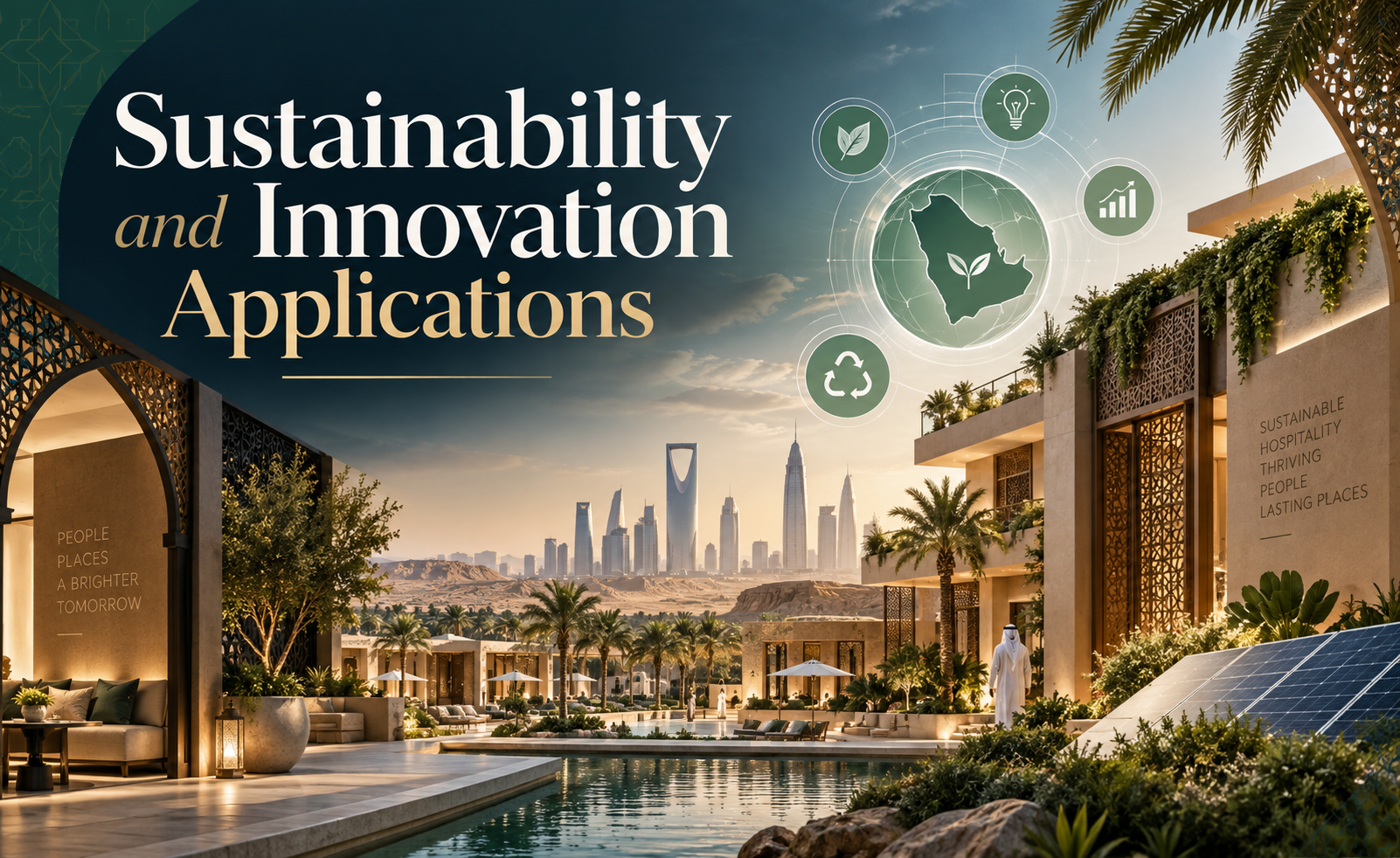
Sustainability and Innovative Applications
Description:
The course provides a foundational perspective for social responsibility and innovation in relationship to individuals, organizations, and the community. Our global future depends on embracing innovation as a catalyst for transitioning towards a sustainable society searching for the balance between social, environmental, and economic aspects of life. The course will provide an overview of Corporate Social Responsibility (CSR) as a distinctive guiding principle within the realm of corporate operations.
Students will be able to explore how organizations can integrate CSR into their practices, and gain the skills to analyze, develop, and make recommendations for implementing strategic CSR in organizations, emphasizing the importance of ethical and socially conscious decision-making.
Objectives:
- Analyze the different elements social responsibility consists of and relate these elements to their own personal and professional life and the sustainable development of the planet.
- Evaluate the importance for individuals and organizations of an ethical behavior.
- Examine social responsibility strategies of organizations and ultimately provide recommendations.
- Appraise sustainable innovative solutions for the hospitality industry.
- Enrolled students: There are no students enrolled in this course.
Leadership & Talent Management
Description
This course will integrate and further develop human resources strategies such as compensation and benefits, learning and development, and human resources planning. Students will learn the theory and practice of motivation, leadership, negotiation and conflict resolution. Students will be encouraged to reflect upon their own people and talent management skills in managing teams. Emphasis is placed on the importance of implementation and application of human resources strategies to the workplace.
LEARNING OUTCOMES
1. Examine the importance of, and main stages in, human resource planning and Talent Management
2. Evaluate different performance management systems and compensation and benefits structures, while ensuring alignment with company goals.
3. Develop and implement comprehensive learning and development strategy based on organizational and individual needs.
4. Appraise the role of leadership, motivation, and conflict management in cultivating a positive work environment.
- Enrolled students: There are no students enrolled in this course.

Academic Deep Dive: Building Strong Business Relationships with Emotional Intelligence
Description:
This course focuses on the critical role of emotional and social intelligence in building and strengthening relationships within the business environment. Through a combination of theoretical concepts, practical exercises, and case studies, students will develop essential skills to effectively navigate interpersonal dynamics, foster collaboration, and enhance organizational success
Objectives:
- Evaluate the impact of social intelligence and psychological theories on relationships and organizational effectiveness.
- Appraise strategies for strengthening business relationships, using emotional to enhance communication, collaboration, and conflict resolution.
- Formulate approaches to build and maintain long-term business relationships, demonstrating advanced decision-making skills and rapport building.
- Enrolled students: There are no students enrolled in this course.
Academic Deep Dive: Macroeconomics
Description:
This course focuses on the fundamental principles of macroeconomics at an intermediate level. It examines economic perspectives, methods, and macroeconomic theories in detail. Main macroeconomic indicators are considered to understand the macro performance of the economy at national and regional levels. It focuses on how modern macroeconomics can shed light on facts such as business cycles, economic growth, unemployment, and inflation. Fiscal and monetary policies are discussed, and its implementation identified in real economies.
Objectives:
1. Calculate the main macroeconomic indicators.
2. Understand key macroeconomic data and its relevance.
3. Apply theoretical knowledge to analyze current economic scenarios.
4. Evaluate current debates about macroeconomic policies and its effects.
- Enrolled students: There are no students enrolled in this course.
Academic Deep Dive: Advanced Revenue Management
Description:
This course is designed to equip future hospitality practitioners with a framework of advanced techniques and strategies for optimizing revenue generation and inventories across all points of sale within hospitality businesses. Through a combination of theoretical insights, and practical applications, students will gain a deep understanding of revenue management principles, tailored specifically to various ancillary revenue streams within a hotel, driving to a total revenue management approach, while delivering exceptional guest experiences in today's competitive hospitality landscape.
Objectives:
- Investigate total revenue management strategies in hospitality that will optimize revenue across all revenue-generating outlets delivering high level services aligned with customer centric policies.
- Evaluate optimization of inventories in ancillary revenue sources such as restaurants, spa services, events and others.
- Elaborate specific tools dedicated to the facilitation of routine sales decision-making processes.
- Formulate optimal pricing strategies aligned with cross selling policies.
- Enrolled students: There are no students enrolled in this course.
Academic Deep Dive: Academic Dissertation
Description:
A dissertation at Les Roches is the fruit of a whole semester’s work researching a topic of the student’s choice under the guidance of a supervisor and allowing the student to graduate with honors if successfully completed. The student identifies a research question related to hospitality or tourism and undertakes independent research during the semester gathering primary data and potentially secondary data to answer this question. The dissertation contains a review of the relevant academic literature, explains and justifies the research process, presents and analyses the results and provides recommendations for academia and the industry. Writing a dissertation is a rewarding task for those who are eligible and wish to be challenged.
Objectives:
1. Formulate relevant research question(s) on a topic in hospitality or tourism.
2. Design a comprehensive, relevant and up-to-date literature review to underpin the research question(s).
3. Execute justified data collection and analysis method(s).
4. Present findings coherent with the research undertaken and recommendations for the industry and academia.
5. Assemble the research together in a 10,000 word dissertation.
- Enrolled students: There are no students enrolled in this course.

Work-based Reflective Report
Description:
During the research done at the workplace, students are required to complete a work-based reflection on their development, and in alignment with the overall outcomes of the professional experiences.
This supervised experience will assist the student towards their own growth and leadership competencies which can then be applied in a professional environment.
Objectives:
- Evaluate the application of the theoretical perspectives for the hospitality establishment.
- Investigate opportunities for implementing development measures in business scenarios.
- Evaluate and justify potential solutions to multifaceted business situations.
- Discuss the leadership impact in hospitality and business environments.
- Enrolled students: There are no students enrolled in this course.
Preparatory English 1 (Diploma)
|
N8022-4
Code
|
4
Credits
|
Level 2
Level
|
v1
Version
|
|
Bachelor of Nursing Program
Makkah National College
|
- Enrolled students: 21

Revenue and Pricing Management - (Wave 1 - 2025)
- Non-editing teacher: Dr. Ahmed Alshafaay
- Enrolled students: 35

Leadership & Talent Management (Wave 1 - 2025)
- Non-editing teacher: Dr. Ahmed Aladawy
- Non-editing teacher: Adel Albalushi
- Non-editing teacher: Ahdab Allbabbn
- Non-editing teacher: Dr. Ahmed Alshafaay
- Non-editing teacher: Mohamed Qablan
- Non-editing teacher: Dr. Osama Salem
- Enrolled students: 34

Hospitality Financial Management and Budgeting - (Wave 1 - 2025)
- Non-editing teacher: Dr. Ahmed Aladawy
- Non-editing teacher: Adel Albalushi
- Non-editing teacher: Ahdab Allbabbn
- Non-editing teacher: Dr. Ahmed Alshafaay
- Non-editing teacher: Mohamed Qablan
- Non-editing teacher: Dr. Osama Salem
- Non-editing teacher: Dr. Hazem Shawky
- Enrolled students: 34

Marketing for the Hospitality Industry (Wave 1 - 2025)
- Non-editing teacher: Dr. Ahmed Aladawy
- Non-editing teacher: Adel Albalushi
- Non-editing teacher: Ahdab Allbabbn
- Non-editing teacher: Dr. Ahmed Alshafaay
- Non-editing teacher: Dr. Shahid Bashir
- Non-editing teacher: Mohamed Qablan
- Non-editing teacher: Dr. Osama Salem
- Enrolled students: 34

Fundamentals of Data Visualization - (Wave 1 - 2025)
- Introduction & Orientation — 1.5h
- Formatting & Formulae — 1.5h
- Working with Text & Numbers — 1.5h
- Conditional Formatting — 1.5h
- Lookup & Formulae II — 1.5h
- Logic with Data Handling — 1.5h
- Excel Charts I — 2h
- Excel Charts II — 2h
- Working with Dates & Times — 2h
- Data Text Functions — 2h
- Data Frequency — 2h
- Revision for Final Exam — 2h
- Final Exam — 1.5h
- Non-editing teacher: Dr. Ahmed Aladawy
- Non-editing teacher: Adel Albalushi
- Non-editing teacher: Ahdab Allbabbn
- Non-editing teacher: Dr. Ahmed Alshafaay
- Non-editing teacher: Dr. Shahid Bashir
- Non-editing teacher: Mohamed Qablan
- Non-editing teacher: Dr. Osama Salem
- Enrolled students: 34

Saudi Hospitality Culture (Wave 1 - 2025)
- Non-editing teacher: Adel Albalushi
- Non-editing teacher: Ahdab Allbabbn
- Non-editing teacher: Dr. Ahmed Alshafaay
- Non-editing teacher: Mohamed Qablan
- Non-editing teacher: Dr. Osama Salem
- Enrolled students: 34

Numerical Skills for the Hospitality Professional
|
H90111-1
Code
|
2 ECTS
Credits
|
Year 1
Level
|
v2.0
Version
|
|
Hospitality & Tourism Faculty · General Education Department
Makkah National College · Revised 2 July 2026
|
- Enrolled students: 35

Hospitality Strategy and Organizations
|
HOS 4801
Code
|
4 ECTS
Credits
|
BBA 6
Level
|
v1.0
Version
|
|
Hospitality & Tourism Faculty · Hospitality Management Department
Makkah National College
|
- Enrolled students: 34

Sustainable Facilities Design
|
TRM 4801
Code
|
4 ECTS
Credits
|
BBA 6
Level
|
v1.0
Version
|
|
Hospitality & Tourism Faculty · Tourism Management Department
Makkah National College
|
- Enrolled students: 35

Methods of Research Inquiry
|
GEN 4901
Code
|
4 ECTS
Credits
|
BBA 6
Level
|
v1.0
Version
|
|
Hospitality & Tourism Faculty · General Education Department
Makkah National College
|
- Enrolled students: 34

Tourism Principles and Practices
|
TRM 2801
Code
|
4 ECTS
Credits
|
BBA 4
Level
|
v1.0
Version
|
|
Hospitality & Tourism Faculty · Tourism Management Department
Makkah National College
|
- Enrolled students: 23

Principles of Sustainability and Innovation
|
TRM 1801
Code
|
2 ECTS
Credits
|
BBA 3
Level
|
v1.0
Version
|
|
Hospitality & Tourism Faculty · Sustainability and Innovation Department
Makkah National College
|
- Enrolled students: 35
Hospitality Innovation Project
- Enrolled students: 11
Hospitality Innovation Project 3
- Enrolled students: 23
Hospitality Innovation Project 1
- Enrolled students: There are no students enrolled in this course.
Hospitality Innovation Project 2
- Enrolled students: 15

Advanced Methods of Research Inquiry
- Enrolled students: 26

Data Analytics for Business Optimization
- Enrolled students: 26
Sustainability and Innovation Applications
- Enrolled students: 26

Sensorial Design Experiences in Saudi Hospitality

- Enrolled students: 13

Leading Teams to Success
- Enrolled students: 16

Managing Luxury Hospitality Establishments
- Enrolled students: 24
Rooms Inventory and Control Management
- Enrolled students: 14

Sustainable Design and Eco Luxury Experiences
- Enrolled students: 24
Customer Experience in a Digital age
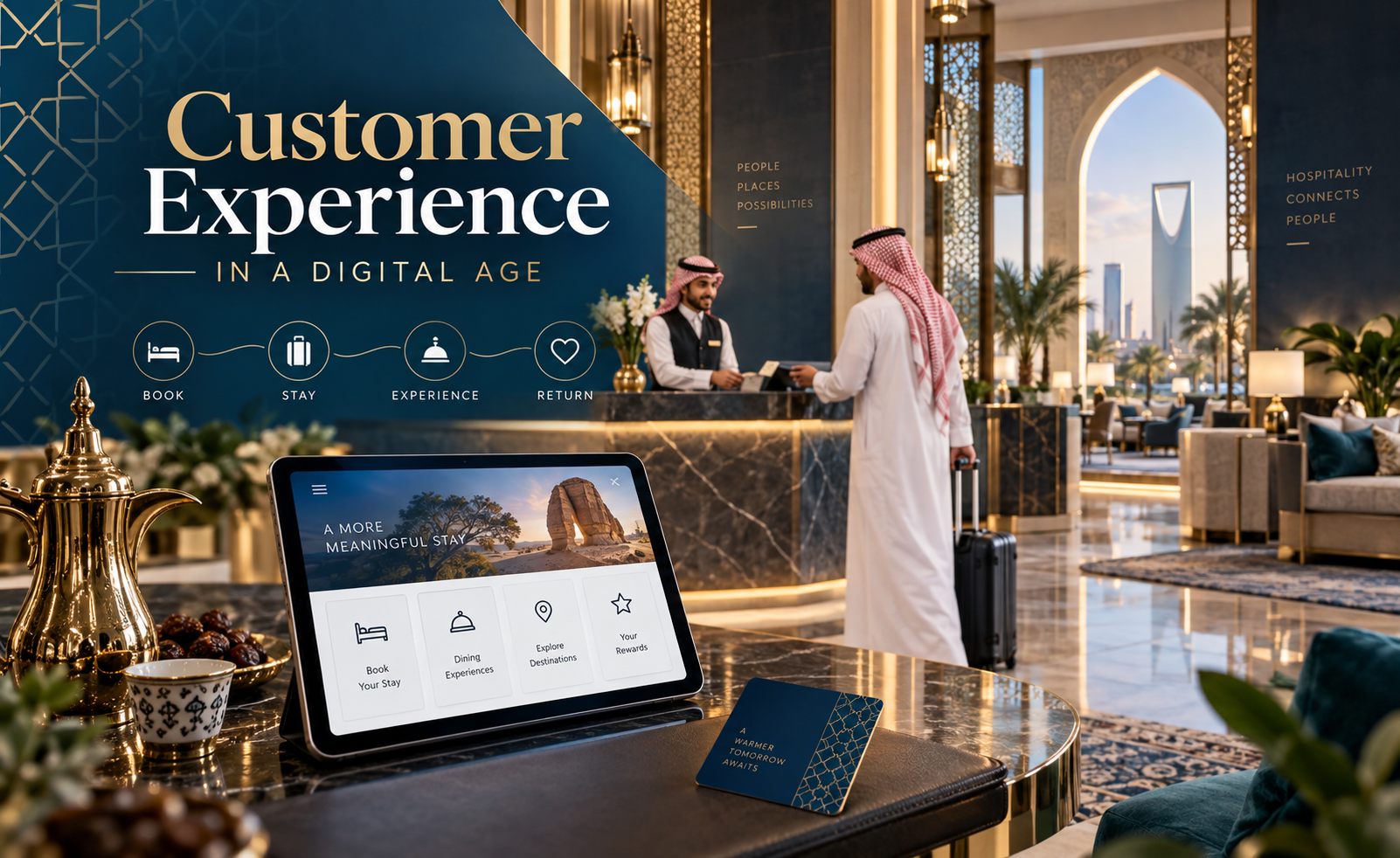
Customer Experience in a Digital age
This course focuses on strategies and best practices for managing customer experience in the digital world. With the development of technologies our customers and their preferences change fast, therefore it is of high importance for companies to implement innovations and provide the best customer experiences in order to be competitive on the market.
You will learn about leading innovative strategies of how to grow the market share, gain new customers, and transform their experiences. The course also introduces the basics of design thinking, experiential marketing, and service innovations for creating more customer-centric hospitality products.
Learning Outcomes
At the end of the course the student should be able to:
Course Content
Teaching and Learning Strategies and Methods
The course enables students to understand and analyse different dimensions of customer experience and how to specifically design this when interacting with customers. Various teaching and learning strategies will be used within this course to assist students in appraising existing techniques and learn new approaches.
Students will benefit from a range of formal lectures, individual exercises and group discussions. Case studies and online supporting material will further enable students to use their creativity and develop relevant experiential marketing strategies.
Course Assessment
| Assessment | Hand-out Week | Hand-in Week | Weight | Learning Outcomes |
|---|---|---|---|---|
| Progress Test | 5 | 6 | 20% | LO1, LO2 |
| Individual Project | 6 | 12 | 40% | LO1, LO2, LO3 |
| Group Project | 12 | 16 | 40% | LO1, LO2, LO3, LO4 |
Required Reading
Additional Resources
- Enrolled students: 14

Saudi Hospitality Culture
|
HOS P803
Code
|
4 ECTS
Credits
|
BBA 1
Level
|
v1.0
Version
|
|
Hospitality & Tourism Faculty · Hospitality Management Department
Makkah National College
|
- Enrolled students: 11

Arabic Language 1
|
GEN P951
Code
|
4 ECTS
Credits
|
BBA 1
Level
|
v1.0
Version
|
|
Hospitality & Tourism Faculty · General Education Department
Makkah National College
|
- Enrolled students: 11

Numerical Skills for the Hospitality Professional
- Enrolled students: 11

Rooms Division in Hospitality
|
RDM P303
Code
|
2 ECTS
Credits
|
BBA 1
Level
|
v1.0
Version
|
|
Hospitality & Tourism Faculty · Hospitality Management Department
Makkah National College
|
- Enrolled students: 11

Effective Communication Skills
|
GEN P901
Code
|
4 ECTS
Credits
|
BBA 1
Level
|
v1.0
Version
|
|
Hospitality & Tourism Faculty · General Education Department
Makkah National College
|
- Enrolled students: 11

Housekeeping Operations
|
RDM P302
Code
|
2 ECTS
Credits
|
BBA 1
Level
|
v1.0
Version
|
|
Hospitality & Tourism Faculty · Hospitality Management Department
Makkah National College
|
- Enrolled students: 11

Front Office Practical, Concierge and PMS
|
RDM P321
Code
|
4 ECTS
Credits
|
BBA 1
Level
|
v1.0
Version
|
|
Hospitality & Tourism Faculty · Hospitality Management Department
Makkah National College
|
- Enrolled students: 11

World of Barista
|
FBP P108
Code
|
2 ECTS
Credits
|
BBA 1
Level
|
v1.0
Version
|
|
Hospitality & Tourism Faculty · Hospitality Management Department
Makkah National College
|
- Enrolled students: 11

Hospitality Discovery Experience in Saudi Arabia
|
HOS P802
Code
|
2 ECTS
Credits
|
BBA 1
Level
|
v1.0
Version
|
|
Hospitality & Tourism Faculty · Hospitality Management Department
Makkah National College
|
- Enrolled students: 11

Fine Dining Service
|
FBP P101
Code
|
4 ECTS
Credits
|
BBA 1
Level
|
v1.0
Version
|
|
Hospitality & Tourism Faculty · Hospitality Operation Department
Makkah National College
|
- Enrolled students: 11

Saudi Cuisine
|
FBP P117
Code
|
4 ECTS
Credits
|
BBA 1
Level
|
v1.0
Version
|
|
Hospitality & Tourism Faculty · Hospitality Management Department
Makkah National College
|
- Enrolled students: 11
Managing Banqueting and Event Operations
|
FBP P105
Code
|
2 ECTS
Credits
|
BBA 1
Level
|
v1.0
Version
|
|
Hospitality & Tourism Faculty · Hospitality Management Department
Makkah National College
|
- Enrolled students: 11

Pastry Atelier
|
FBP P106
Code
|
4 ECTS
Credits
|
BBA 1
Level
|
v1.0
Version
|
|
Hospitality & Tourism Faculty · Hospitality Management Department
Makkah National College
|
- Enrolled students: 11